Most store owners assume more sales means more traffic. But if your silver jewelry store already gets a steady flow of visitors and conversions haven't kept pace, the problem usually isn't reach — it's what happens after someone lands on your site. Learning to sell silver online profitably often comes down to converting the traffic you already have, not chasing more. This guide breaks down eight practical ways to turn existing visitors into buyers, without spending another rupee on ads or SEO traffic growth.
Your product page is where the decision gets made, so it needs to work harder than a photo and a price. Every listing should answer the questions a buyer is silently asking: Is this real sterling silver? Will it tarnish? What's the return policy if it doesn't fit or match the photos?
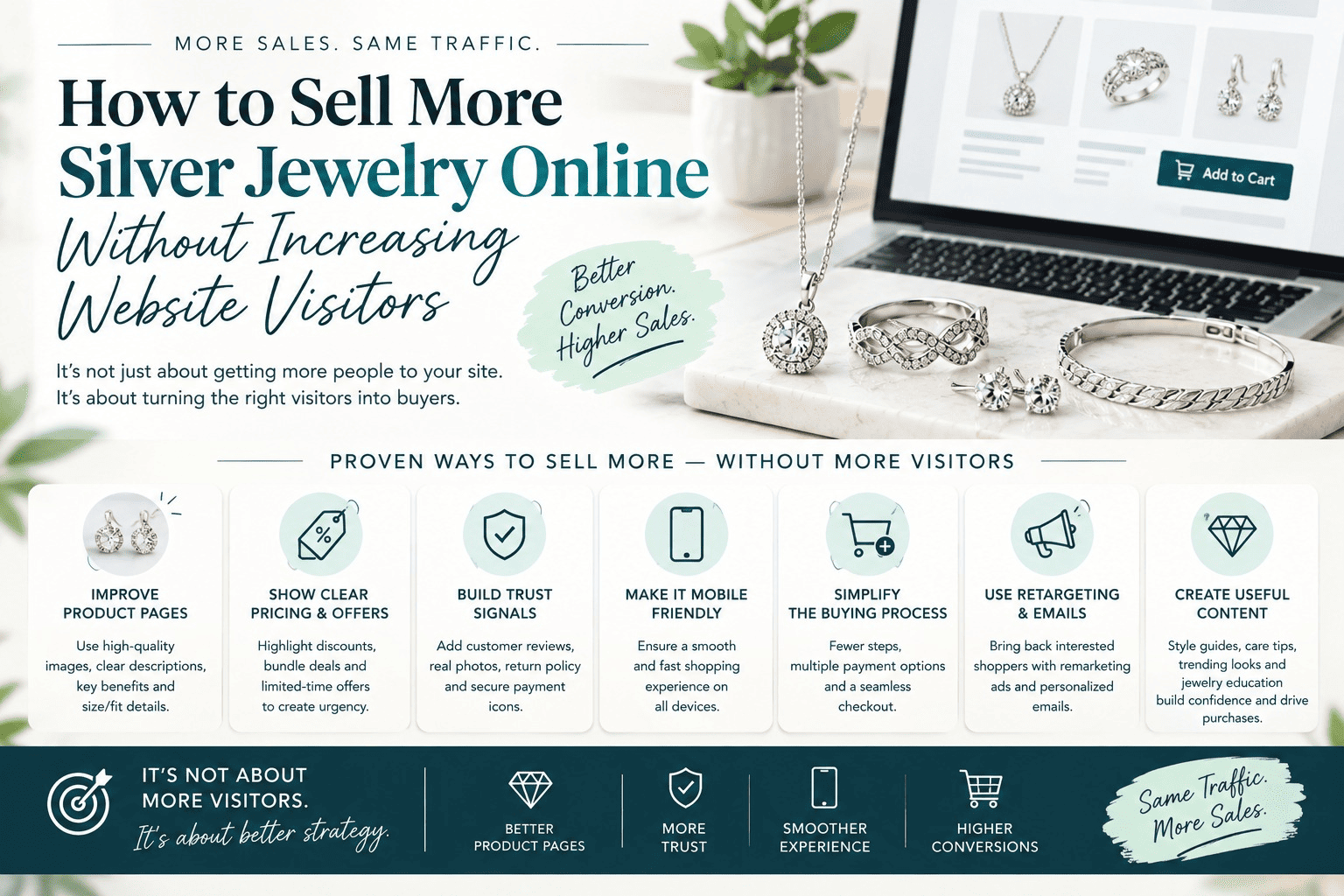
Start with clear, benefit-driven product titles instead of vague names. "925 Sterling Silver Oxidized Pendant, Handcrafted" tells a buyer more than "Silver Pendant 04." Add specifications like purity (925), weight, and finish directly on the page — not buried in a downloadable PDF. A visible "Add to Cart" button, a clean layout, and fast page load times all reduce the friction that causes people to abandon a page before they've even finished reading it. This single change is often the fastest route to increasing silver jewelry sales online, because it fixes leaks at the exact point of decision.
Jewelry is a tactile product being sold through a screen, so your images are doing the job your customer's hands would normally do. Blurry, poorly lit, or inconsistent photography is one of the most common reasons a visitor closes a tab without buying.
Show each piece from multiple angles, including close-ups that reveal texture, stone settings, and craftsmanship details. A worn/scale shot — the pendant on a neck, the ring on a hand — helps a shopper judge size and fit, which is one of the biggest hesitations in jewelry purchases. Consistent backgrounds and lighting across your catalog also make the store feel more professional and trustworthy, which matters more for silver jewelry than almost any other product category, since buyers are already wary of plating and quality claims.
Confusing pricing creates hesitation, and hesitation kills conversions. If your pricing changes based on silver rates, weight, or customization, explain that logic clearly instead of leaving customers to guess why one pendant costs more than a similar-looking one.
A simple line like "Price varies by silver weight and current market rate, updated daily" removes the mystery. If you offer discounts for bulk orders or wholesale silver jewelry buyers, state the thresholds plainly rather than asking people to "contact for pricing," which filters out casual browsers who might have converted with a straightforward number in front of them. Transparent pricing is a quiet but consistent factor in how to sell silver online to both individual shoppers and small retailers.
Silver jewelry buyers are cautious by nature — there's a long history of misrepresented purity and quality in the industry, and shoppers carry that skepticism into every new store they visit. Trust has to be established before the "Buy Now" button becomes relevant.
Display your hallmark or purity certification clearly, along with information about your manufacturing process if you're a maker rather than a reseller. A short "About Us" section with real details — where the jewelry is made, how long you've been in business, your quality checks — does more for conversions than most people expect. Trust badges, secure checkout icons, and a visible return/exchange policy all work together to reassure a hesitant buyer at the exact moment they're deciding whether to commit.
A confusing site structure sends visitors away just as effectively as a lack of trust does. If someone can't find rings under a certain price, or filter pendants by stone type, they'll leave rather than dig through your entire catalog.
Audit your navigation and filtering options from a first-time visitor's perspective. Category pages should be specific (Silver Rings, Silver Pendants, Silver Earrings) rather than one long undifferentiated list. Search functionality should tolerate typos and near-matches. And checkout should take as few steps as possible — every extra form field or unnecessary account-creation requirement is a chance for someone to give up partway through. Reducing this kind of friction is a practical, unglamorous strategy for how to increase silver jewelry sales online without touching your traffic numbers at all.
Most visitors won't buy on their first visit, and that's normal — but it doesn't mean the visit was wasted, as long as you have a way to bring them back. Abandoned cart emails, retargeting on the channels they came from, and simple reminder sequences can recover a meaningful share of near-misses.
If someone added a silver bracelet to their cart and left, a follow-up message showing the item again, perhaps with a small nudge like limited stock or a time-bound offer, often closes the sale without needing a new visitor at all. This kind of recovery work costs little to set up and repeatedly outperforms spending on fresh traffic, because these are people who already showed real intent.
Generic storefronts convert at a generic rate. Showing the right product to the right visitor — based on what they've browsed, what's in their cart, or what similar customers bought — increases the odds that any given visit ends in a purchase.
Simple personalization tactics include "Customers who viewed this also liked" sections, recently viewed product reminders, and tailored recommendations based on past purchase categories (rings vs. pendants vs. earrings, for example). None of this requires enterprise software; even basic e-commerce platforms support these features out of the box. Personalization is one of the more overlooked online jewelry marketing strategies, largely because its impact is gradual rather than immediate, but it compounds as your store gathers more browsing and purchase data over time.
Reviews, ratings, and real customer photos do something product descriptions can't: they let a hesitant buyer see the product through someone else's experience instead of just the seller's claims. This is especially persuasive for silver jewelry, where quality concerns are common.
Display star ratings and written reviews prominently on product pages, not tucked away on a separate tab. Encourage customers to share photos of themselves wearing a piece, and feature the best of these on your site or product listings. Even a handful of specific, detailed reviews — mentioning things like how the piece held up over time or how it compared to expectations — carries more weight than a generic five-star average with no context behind it.
Don’t Miss Out – Start Browsing Our Wholesale Silver Catalogue Now
VIEW CATALOGUESelling more silver jewelry online isn’t only about increasing website traffic, it’s about converting existing visitors through better product pages, clear pricing, strong visuals, trust, and a smoother buying journey. Reliable sourcing also matters, with consistent quality, attractive designs, and flexible customization helping retailers grow. silver jewellery manufacturer Glorietta Jewels supports retailers, wholesalers, and online jewelry businesses with wholesale sterling silver jewelry, custom manufacturing, and private-label solutions to help them increase silver jewelry sales online and build a stronger product offering.
Buy Direct from the Manufacturer – 925 Sterling Silver at the Best Quality and Price.
CONTACT US