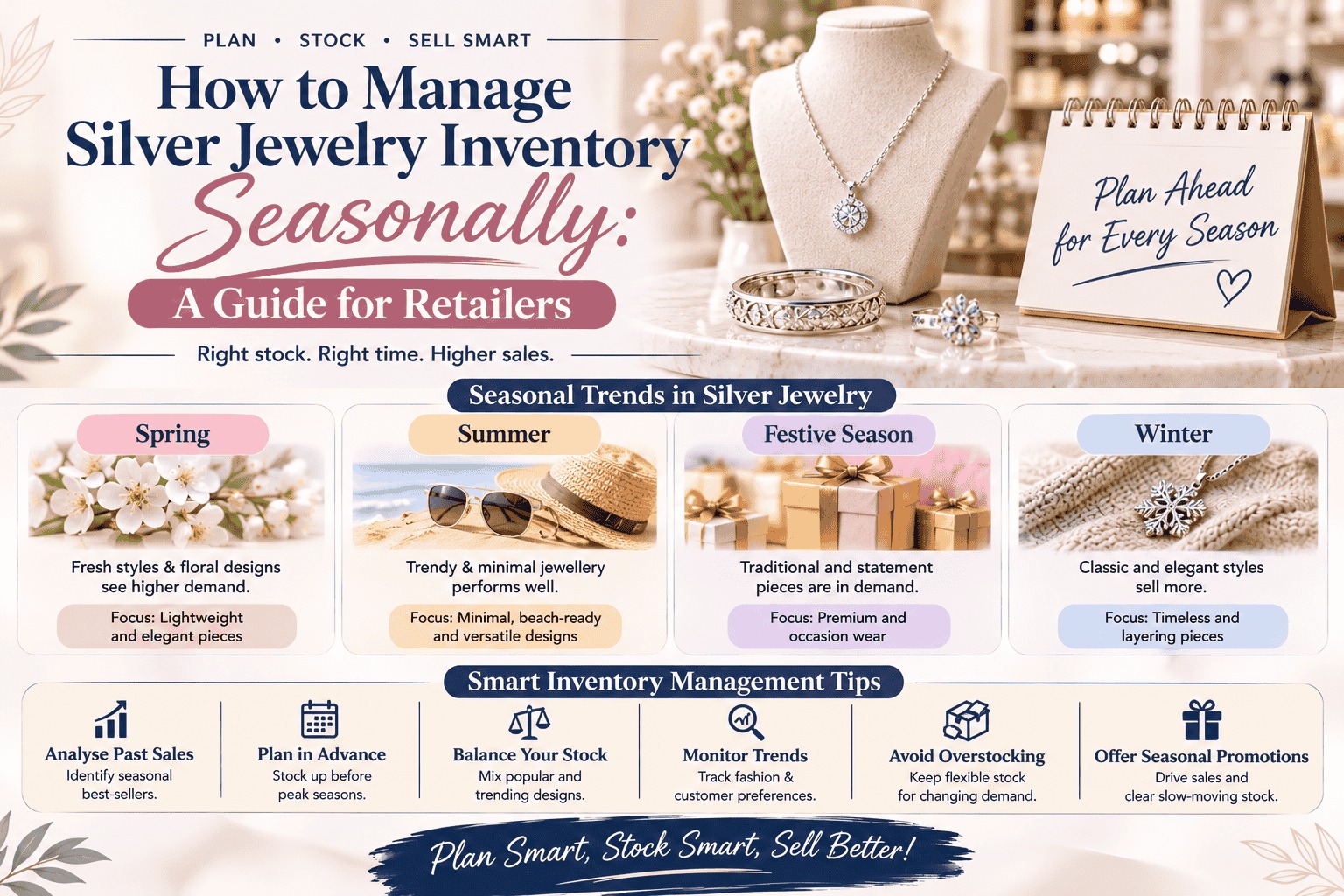
Silver jewelry sells all year, but it doesn’t sell evenly. Gifting seasons lift demand for pendants and earrings, summer shifts interest toward lighter pieces, and a slow quarter can leave shelves full of styles that no longer move. Retailers who order by habit usually end up with too much of one thing and too little of another.
This guide explains how to manage silver jewelry inventory seasonally, using sales history, trend signals, and flexible ordering. The aim is to keep the right pieces in stock at the right time without tying up cash in slow items.
Seasonal silver jewelry inventory management starts with knowing when your customers actually buy and what they buy. Orders placed before you understand that pattern tend to be too large, too broad, or too late.
Most retailers see their strongest periods around Valentine’s Day, Mother’s Day, the back-to-school and wedding months, and the year-end holidays. Your own calendar may differ. A shop in a tourist area may peak in summer, while a boutique focused on gifts may do most of its business in November and December.
Mark each peak on a calendar and work backward from it. Allow time for production, shipping and receiving, so stock arrives before the demand does, not during it.
Your past sales are the most reliable guide you have. Look at the last one to two years and note:
Sell-through rate matters more than total units sold. A style that sold 60 pieces but needed a markdown to get there is a weaker performer than one that sold 40 at full price.
Sales data tells you what worked. Trend signals tell you what may work next. Watch social media, fashion retailers, and the feedback customers give you in store. Minimalist stacking pieces, textured finishes and personalized designs have all gained ground in silver, for example.
Treat trends as a small test, not a full commitment. Order a limited quantity of a new style and see how customers respond before you scale it up.
A written plan makes seasonal silver jewelry inventory management a routine instead of a scramble. It doesn’t need to be complicated. A simple spreadsheet organized by season works well.
If you are wondering how to restock silver jewelry without overbuying, the answer is usually smaller, more frequent orders. Order roughly 70 to 80 percent of your forecast up front, then use early sales to decide how much of the remainder you need.
Don’t Miss Out – Start Browsing Our Wholesale Silver Catalogue Now
VIEW CATALOGUEEven good forecasts miss sometimes, so it helps to build a buffer into how you buy. These approaches reduce the cost of being wrong:
A few errors come up again and again:
A reliable supplier can make seasonal planning much easier. Good seasonal silver jewelry inventory management depends on predictable lead times, clear communication and order terms that match how retailers actually buy.
When evaluating a wholesale partner, look for:
Talk to your supplier before each season starts. Sharing your expected volumes and key dates helps them prepare, and it helps you secure the stock you need on time.
Silver jewelry demand follows patterns, so start with your sales data, plan each season ahead, and order in stages with a mix of dependable core pieces and a few tested new styles. Working with a manufacturer like Glorietta Jewels, a Thailand-based sterling silver jewelry supplier for wholesale buyers, helps you line up production timelines and adjust quantities before each peak season. Over time, these habits reduce overstock, cut markdowns, and keep your best sellers available when customers want them.
Buy Direct from the Manufacturer – 925 Sterling Silver at the Best Quality and Price.
CONTACT US