In the wholesale sterling silver market, the type of manufacturing model you choose has a direct impact on your profit margins. With so much confusion over what the difference is between OEM and ODM, and how each model has an impact in terms of cost, speed, branding, and long-term business growth, this blog post explains exactly what the difference between ODM and OEM is, explains OEM vs. ODM silver jewelry, and shares expert insights on which model delivers the maximum profitability.
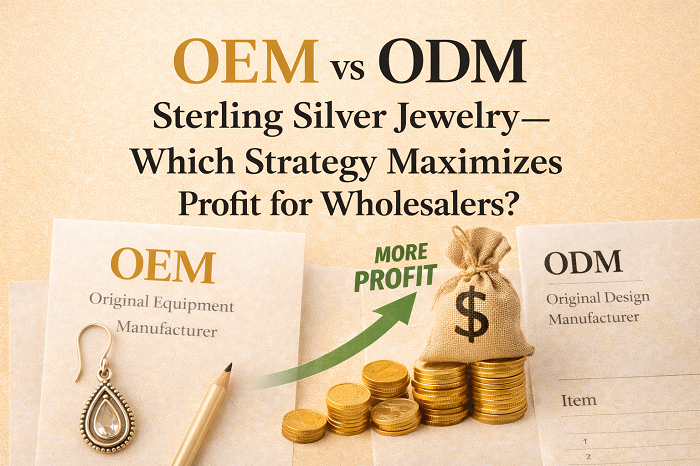
Before choosing the best strategy, every wholesaler must be clearly aware of the difference between ODM and OEM. Although the terms sound similar, each represents a distinct production approach with unique advantages.
ODM is ideal for wholesalers who want readymade designs. The manufacturer already owns the design, mold, and concept. You simply select the product, add your branding, and launch quickly.
Here is where the difference between ODM and OEM becomes more pronounced-ODM focuses on speed and affordability.
OEM lets wholesalers create exclusive and customized silver jewelry designs. The manufacturing is based on your sketches or concept.
That explains what the difference is between ODM and OEM-OEM gives you more control, but requires higher investment.
When comparing OEM vs ODM silver jewelry, profitability depends on production costs, exclusivity, and customer demand.
Although OEM requires a higher initial investment, it provides greater long-term profit because wholesalers can sell exclusive designs at premium prices with no direct competition.
Winner: OEM (High ROI & long-term value)
Although OEM requires a higher initial investment, it provides greater long-term profit because wholesalers can sell exclusive designs at premium prices with no direct competition.
Winner: OEM (High ROI & long-term value)
OEM gives a stronger advantage because exclusive products allow for higher market pricing.
This is a key area in the difference between ODM and OEM—OEM supports long-term brand building.
Although OEM requires a bigger commitment, wholesalers often experience better margins, stronger customer loyalty, and repeat B2B orders because exclusive designs sell at higher value.
Winner: OEM (Higher margins offset MOQ requirements)
The best choice ultimately depends on your business goals—but for wholesalers looking to build a strong, premium, and recognizable brand, OEM is the clear winner.
✔ You aim for a premium brand identity
✔ You want exclusive designs your competitors can't copy
✔ You want higher profit margins per item
✔ You want to build long-term brand recognition
✔ You are targeting high-end retailers, boutiques, or global markets
OEM is the most profitable strategy for wholesalers who want to grow sustainably with designer-level, high-value sterling silver collections.
✔ You want quick, ready-to-sell products
✔ You need short-term or low-budget options
✔ You sell trend-driven fast-moving jewelry
ODM is suitable for speed, but OEM is superior for brand value and profitability.
This section includes essential jewelry manufacturing OEM tips for wholesalers to help boost profit and avoid common challenges.
Choose manufacturers who offer 925 hallmarking and purity certification.
Follow market trends for ODM and customer preferences for OEM.
ODM = low MOQ
OEM = medium MOQ for cost efficiency
Check finishing, weight, stone quality, and durability.
Established manufacturers offer better pricing, consistent quality, and design support.
When selecting a manufacturer for OEM vs ODM silver jewelry, look for:
Manufacturers experienced in sterling silver ensure purity and consistent quality.
Especially important when understanding what is difference between ODM and OEM, since OEM requires deep design support.
Good partners provide clarity on mold cost, plating, and production charges.
Smooth communication reduces delays, especially in OEM projects.
Don’t Miss Out – Start Browsing Our Wholesale Silver Catalogue Now
VIEW CATALOGUEUnderstanding the difference between ODM and OEM helps wholesalers choose the most profitable strategy—while ODM offers speed and affordability, OEM delivers exclusivity, stronger branding, and higher long-term margins. For wholesalers aiming to scale with premium sterling silver collections, partnering with a trusted OEM manufacturer like Glorietta Jewels, one of the best OEM silver jewelry manufacturers in Thailand, ensures quality craftsmanship, custom designs, and flexible production for sustainable growth.
Buy Direct from the Manufacturer – 925 Sterling Silver at the Best Quality and Price
CONTACT US